Heat Pump Water Heater Guide 2026 Tool (Guide & Data)
Size and specify a heat pump water heater using firsthour rating, installation air, electrical capacity, condensate routing, operating modes, noise, and local energy prices.
The Silent Thief in Your Basement
Short Answer: A heat pump water heater is often the lowest-energy replacement for an electric resistance tank, but buy it by first-hour rating and installation conditions—not tank gallons or a national savings claim. Confirm air volume, ambient-temperature limits, electrical circuit, condensate path, noise location, service clearance, and operating mode. Compare annual cost with your own tariffs and measured hot-water use.
Your water heater is the most boring appliance in your home. It sits in the basement or garage, rusting silently, doing its job without complaint. You only think about it when the shower runs cold or the tank finally bursts and floods your basement.
But this boring box is eating 18-25% of your home's total energy consumption. For most families, that's the second-largest energy expense after heating and cooling. The average American household spends $400-$600 per year just heating water.
If you have a standard electric tank, you are using "resistance heating." It's essentially a giant toaster coil submerged in water. Electricity flows through the element, the element gets hot, and heat transfers to the water. This process is 100% efficient in the physics sense—every watt of electricity becomes a watt of heat.
That sounds good. 100% efficiency! Peak performance!
But then you learn about Heat Pump Water Heaters (HPWH), and you realize 100% is absurdly bad.
A modern Heat Pump Water Heater achieves 300-400% efficiency (also expressed as COP 3.0-4.0 or UEF 3.0+).
For every 1 unit of electricity you put in, you get 3-4 units of heat out.
How is this possible? Did we break the laws of thermodynamics?
No. The trick is that Heat Pump Water Heaters don't create heat. They move it.
The "Reverse Fridge" Explained: A Physics Lesson
Put your hand behind your refrigerator. It's warm back there. The fridge is pulling heat out of the cold interior (your leftover pizza) and dumping that heat into the warm kitchen.
This seems backwards—heat moving from cold to hot—but that's exactly what refrigeration does. It uses a refrigerant cycle to pump thermal energy "uphill" against the temperature gradient.
A Heat Pump Water Heater does the exact same thing, just with different buckets:
- Cold side: The air in your basement or garage.
- Hot side: The water in your tank.
Here's the step-by-step process:
Evaporator Coil (Cold Side): A fan pulls air from the room across an evaporator coil. Inside this coil is a cold refrigerant (around 40°F). Even if the room air is only 60°F, the refrigerant is colder, so heat flows from the air into the refrigerant. The refrigerant evaporates into a gas.
Compressor (The Magic): The gaseous refrigerant enters a compressor. This is the part that consumes electricity. The compressor squeezes the gas, dramatically increasing its pressure and temperature. The refrigerant exits the compressor at 150-180°F.
Condenser Coil (Hot Side): The hot, high-pressure refrigerant gas flows through a condenser coil wrapped around (or inside) the water tank. The refrigerant is now hotter than the water, so heat flows from the refrigerant into the water. The refrigerant condenses back into a liquid.
Expansion Valve: The liquid refrigerant passes through an expansion valve, dropping its pressure and temperature. It returns to the cold evaporator coil, and the cycle repeats.
Exhaust Air: The air that passed over the evaporator coil has lost some of its heat. It exits the unit cold and dry, typically 6-10°F cooler and significantly dehumidified.
The Key Insight: You are harvesting ambient heat that's already floating around in your home—free solar gain through windows, waste heat from appliances, body heat from occupants—and concentrating it into your shower water. The only electricity you pay for is running the compressor and fan, which is a fraction of the energy required to heat water directly with resistance elements.
Build the Operating-Cost Case From Your Bills
Do not start with a national annual-savings number. Start with the existing heater's annual fuel use or EnergyGuide estimate, the replacement model's listed annual energy use, and your marginal tariff. Separate fixed utility charges because replacing a water heater may not eliminate them.
For an electric-to-electric comparison:
Annual operating cost = listed or modeled kWh × marginal electricity rate
Worked scenario: an existing resistance unit is estimated at 3,800 kWh per year and a candidate HPWH at 1,050 kWh. At $0.18/kWh, the planning difference is (3,800 − 1,050) × $0.18 = $495 per year. At $0.10/kWh, the same energy difference is $275. The equipment did not change; the local rate changed the result.
For a gas-to-electric conversion, include gas therms avoided, electricity added, fixed gas charges that remain for other appliances, any charge eliminated when the gas account closes, and space-conditioning interaction. Use the water-heater fuel-cost worksheet for a normalized comparison.
Installed cost should be quoted as separate lines for equipment, delivery, drain pan, seismic restraint where required, plumbing, electrical circuit or panel work, condensate route, duct kit, mixing valve, permits, disposal, commissioning, and finish repair. Verify current incentives on the official program site before signing; do not subtract an expired or conditional credit from the contractual price.
The "Gotchas": Read This Before Buying
Heat pump water heaters are not drop-in replacements for every situation. The technology has specific requirements and quirks.
1. Space Requirements: It Needs Air to Breathe
A heat pump water heater is harvesting heat from ambient air. If you lock it in a tiny closet, it will quickly deplete the available heat, efficiency will plummet, and it will switch to backup resistance mode.
Minimum Requirements:
- Rheem ProTerra: 700 cubic feet (~10' x 10' x 7' room)
- A.O. Smith Voltex: 750 cubic feet
- Stiebel Eltron Accelera: 700 cubic feet
Solutions for Small Spaces:
- Install a louvered door to allow airflow from adjacent rooms or hallways.
- Install transfer ducts from an adjacent larger space.
- Some units (like newer Rheem models) can be ducted to pull air from outside or another room.
2. Noise: It Sounds Like a Running Dishwasher
A standard resistance tank is silent. A heat pump water heater has a compressor and fan—it sounds like a quiet refrigerator or dishwasher running (45-55 decibels).
Real-World Impact:
- If it's in the basement or garage: You won't notice.
- If it's in a utility closet adjacent to your bedroom: You will notice at 2 AM.
Solution: Don't install it on the other side of a bedroom wall. If you must, build a sound-dampening enclosure (but maintain minimum airspace).
3. Cold Air Exhaust: A Feature, Not a Bug
The exhaust from a HPWH is cold (6-10°F below intake) and dehumidified. What does this mean in practice?
In a Basement: This is amazing. Basements are often damp. Your water heater is now a free dehumidifier, pulling 5-10 pints of moisture per day out of the air. No more musty basement smell.
In a Conditioned Space: You're cooling a space that your HVAC then has to reheat. This creates a small parasitic load in winter. However, studies show the net efficiency is still strongly positive because the heat pump mode is 3x more efficient than resistance.
In a Garage (Cold Climate): Efficiency drops as ambient temperature drops. Below 50°F, efficiency suffers. Below 40°F, some units switch to hybrid mode. Below 35°F, many switch to pure resistance.
For Cold Climates: Look for units with good low-temperature performance (Stiebel Eltron operates down to 35°F in heat pump mode) or install in a heated space.
4. Recovery Rate: Patience with Hot Water
Resistance elements can dump 4,500 watts into water instantly. A heat pump compressor delivers 500-700 watts of heat.
This means recovery time—how long it takes to reheat after a big draw—is slower in pure heat pump mode.
Practical Impact:
- For 2-3 people with normal schedules: You'll never notice. The tank reheats overnight.
- For 4+ people taking back-to-back showers: You might run lukewarm by shower #4.
Solution: Use "Hybrid" mode for families. This uses heat pump for 90% of heating but kicks in resistance elements during heavy demand.
Operating Modes: Don't Set It and Forget It Wrong
Every HPWH has multiple modes. Picking the wrong one destroys your savings.
1. Heat Pump Only / "Energy Saver" / "Efficiency"
- Uses ONLY the compressor. Resistance elements never fire.
- Maximum savings. Slowest recovery.
- Best for: 1-3 person households, vacation homes, off-peak usage patterns.
2. Hybrid / "Auto" / "High Efficiency"
- Uses heat pump primarily. Resistance kicks in if demand exceeds heat pump capacity (e.g., back-to-back showers).
- Good savings with reliable hot water.
- Best for: Families of 4+, homes with unpredictable schedules, visiting relatives.
3. Electric / "High Demand"
- Ignores the heat pump. Runs only on resistance elements.
- This is a standard electric tank. You lose all efficiency benefits.
- Use for: Emergency only (if compressor fails).
4. Vacation / "Away"
- Reduces setpoint to 50°F. Minimal energy use.
- Use for: Extended trips (1+ week).
Pro Tip: Many units have smartphone apps or built-in scheduling. Program to do bulk heating overnight (off-peak rates) and maintain temperature during the day.
Installation Considerations
Electrical
- Most HPWHs require a 240V, 30-amp circuit (same as standard electric tank).
- Some newer 120V plug-in models exist (e.g., Rheem 120V HPWH) for easier retrofit, but they have lower recovery rates.
Plumbing
- Same connections as any tank water heater. If you're replacing an existing electric tank, it's usually straightforward.
- You will need a condensate drain—HPWHs produce 5+ gallons of condensate per day in humid climates. This can go to a floor drain, condensate pump, or outside.
Height
- HPWHs are taller than standard tanks (the heat pump unit sits on top). Measure ceiling clearance first.
- Typical height: 60-68 inches for 50-gallon units vs. 50-58 inches for standard tanks.
Compare Current Models Without a Brand Ranking
Product lines, controls, refrigerants, warranties, and availability change. Search the current ENERGY STAR product finder, then confirm the exact model number on the quote and manufacturer submittal. Compare:
- rated storage volume and first-hour rating;
- UEF under the applicable draw pattern;
- voltage, current, element capacity, and required breaker;
- minimum and maximum ambient conditions;
- compressor cut-off temperature;
- intake/exhaust clearance and ducting approval;
- sound data and measurement basis;
- condensate connection and freeze protection;
- filter and anode service access;
- warranty term, labor coverage, registration, and local service;
- connected controls, schedule behavior, and what happens after a power or network outage.
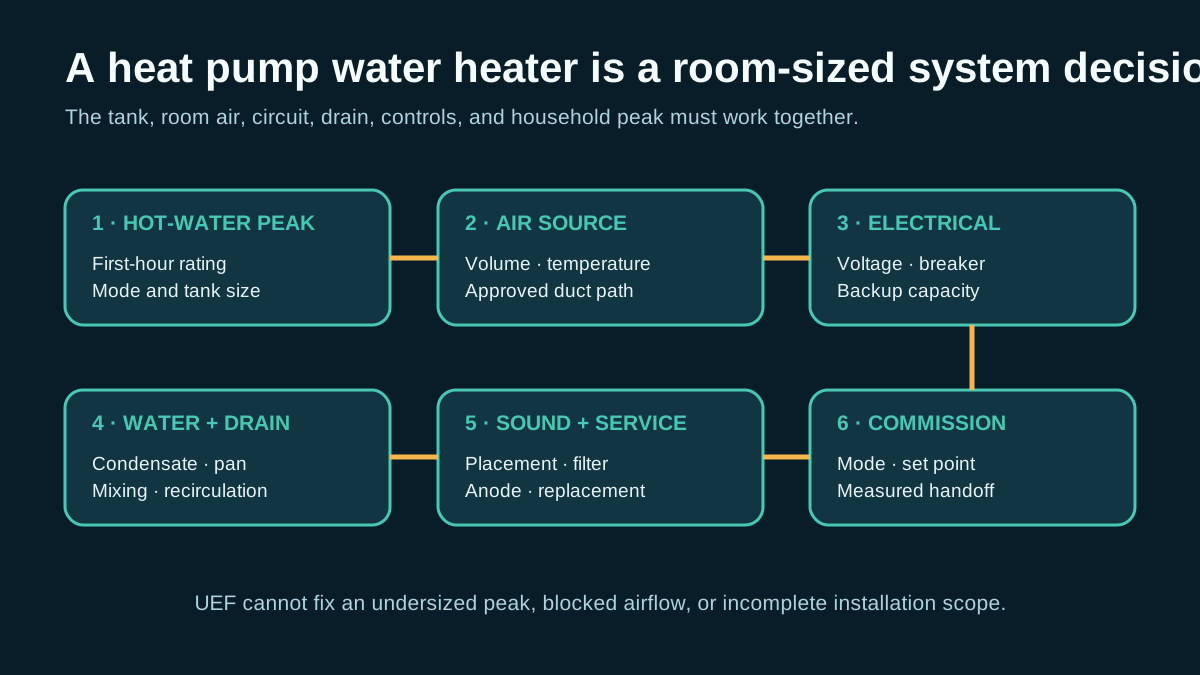
A high UEF does not compensate for insufficient first-hour delivery or an installation that forces frequent resistance operation.
Plan Before the Existing Tank Fails
Record the current model, age, fuel, circuit, venting, drain route, space dimensions, and signs of corrosion or leakage. Get a replacement scope while you still have time to compare options. A drain pan, leak sensor, automatic shutoff, and suitable floor protection may reduce damage risk, but they do not replace inspection and timely replacement.
Choose an HPWH when the measured hot-water profile, installation space, local rates, and service support make the case. Keep or choose another system when the site cannot meet those needs without unreasonable work. The payback is a project result, not a product label.
Size for the Busiest Hour, Not Household Headcount Alone
First-hour rating estimates how much hot water a storage unit can supply during an hour that begins with a fully heated tank. ENERGY STAR defines FHR at a 125°F outlet condition under the UEF test. Use it as a comparable product rating, then check local plumbing rules and the manufacturer's sizing method.
Build a peak-hour draw list from the household's real routine:
| Draw | Flow or volume input | Duration or count | Hot-water estimate |
|---|---|---|---|
| Shower 1 | Measured shower flow | Minutes | |
| Shower 2 | Measured shower flow | Minutes | |
| Bath | Filled volume | One fill | |
| Dishwasher | Manual or meter data | Cycle | |
| Clothes washer | Manual or meter data | Cycle | |
| Sink use | Measured flow | Minutes |
Do not count total mixed water as tank water. A shower blends hot and cold. The hot fraction depends on storage temperature, inlet temperature, desired shower temperature, and piping losses. Use conservative measured values or the sizing method required by the product and local code.
A larger tank can reduce resistance-element use during a sharp morning peak because it stores more heat. ENERGY STAR's design guidance specifically recommends considering an upsized tank where space and budget allow. Compare the exact model's FHR; two nominal 50-gallon units can deliver differently.
Check the Installation Space as an Energy Source
The compressor pulls heat from its intake air. That makes the installation room part of the system. Measure room volume, door openings, adjacent connected space, seasonal temperature, ceiling height, and service clearances. Then compare them with the exact manual.
Use this decision table:
| Site condition | Question before purchase |
|---|---|
| Open basement | Will localized cooling worsen comfort or help dehumidification? |
| Conditioned utility room | Does winter space heat come from an efficient heat pump, resistance heat, gas, or another source? |
| Garage | Does the room stay within the model's compressor operating range? |
| Closet | Are approved louvers, grilles, or ducts required, and where do they connect? |
| Low ceiling | Can the filter, anode, controls, and tank be serviced or replaced? |
| Bedroom-adjacent wall | Is the published sound data acceptable for this placement? |
ENERGY STAR says an operating HPWH can cool the surrounding air by roughly 2,500–5,000 Btu/h. That is useful context, not a promise of whole-room air conditioning. The effect varies with operating time, airflow, room size, and the building's heating and cooling systems.
Do not improvise intake or exhaust ducting. Use only configurations approved for the model. Duct length, fittings, grilles, and pressure drop can reduce airflow and performance.
Choose the Electrical Path Deliberately
Standard integrated HPWHs often use a dedicated 240-volt circuit and include resistance elements. Some 120-volt products are designed for easier fuel-switching where a new 240-volt circuit is difficult. ENERGY STAR lists different efficiency criteria for integrated 240-volt-class and 120-volt/15-amp products, so compare them as distinct configurations.
Ask the electrician or installer to document:
- nameplate voltage, current, and maximum overcurrent protection;
- existing circuit size, conductor, disconnect, and shared loads;
- panel capacity and any load-management option;
- resistance-element capacity and control sequence;
- outage behavior and schedule retention;
- permit and inspection responsibility.
A 120-volt path may trade simpler electrical work for lower backup or recovery capability. A 240-volt unit may serve sharp demand better but require circuit work. The right choice comes from the hot-water profile and electrical scope, not the plug alone. Use the electrical panel capacity guide before assuming a service upgrade is necessary.
Design Condensate and Water-Damage Protection
The evaporator produces condensate. Show the route on the quote: gravity drain or listed pump, pipe material and slope, termination, risk or air-gap requirements, freeze exposure, pump power, overflow response, and access for cleaning. Never route condensate where a blockage can damage finishes or create a slip hazard.
Also scope the water side:
- drain pan and legal termination where required;
- accessible shutoff and drain valve;
- thermal expansion control when the plumbing system is closed;
- temperature and pressure relief discharge;
- dielectric or material transitions as applicable;
- seismic restraint where required;
- leak sensor and automatic shutoff if selected;
- recirculation connection and control strategy.
Continuous hot-water recirculation can add piping loss and drive extra heater operation. ENERGY STAR's installation guidance warns against continuous circulation controls for HPWH installations. Use demand, schedule, temperature, or occupancy control that fits the plumbing and local code.
Treat a Mixing Valve as a Designed Component
Storing water hotter and tempering it at the outlet can increase usable mixed-water capacity, but it also changes scald, standby-loss, scale, energy, and control considerations. A qualified installer should select and commission a listed thermostatic mixing valve when used.
Document the storage set point, delivered set point, adjustment access, check valves, recirculation interaction, and verification method. Do not raise the tank temperature as an improvised fix for undersizing or without scald protection.
Commission the Actual Operating Mode
At handoff, do not accept “hybrid mode” as the whole explanation. Record the selected mode, schedule, set point, resistance-element behavior, vacation setting, demand-response enrollment, and recovery plan for guests or unusual loads.
The commissioning check should cover:
- compressor and fan start without fault;
- intake and exhaust paths are clear;
- condensate drains under real operation;
- hot and cold connections and relief discharge are leak-free;
- delivered temperature is measured at representative fixtures;
- mixing valve is verified when installed;
- app or local controls work without making the appliance dependent on a subscription;
- filter, anode, drain, controls, and shutoffs remain accessible;
- homeowner receives model, serial, manual, permit, warranty, and installer contacts.
Track hot-water complaints, mode changes, and electricity use during the first month. If the unit spends far more time in resistance mode than expected, investigate demand, settings, inlet temperature, room temperature, airflow, sizing, and faults before judging the technology.
Quote Comparison Checklist
- Exact model and rated storage volume
- UEF and draw pattern
- First-hour rating
- Compressor operating-temperature range
- Voltage, breaker, and resistance-element scope
- Room volume and approved airflow strategy
- Sound data and placement
- Condensate route and overflow response
- Drain pan, leak protection, and shutoff
- Mixing valve and recirculation control, if used
- Permit, disposal, commissioning, and finish repair
- Labor, parts, sealed-system, and tank warranty terms
- Current incentive eligibility verified independently
Frequently Asked Questions
Is a heat pump water heater 300% efficient?
UEF values above 1 are possible because the unit moves heat from air into water rather than creating all heat through resistance. UEF is a standardized product metric, not the seasonal COP of every installation.
Will it make my basement cold?
It cools and dehumidifies intake air while the compressor runs. The room effect depends on operating hours, connected air volume, climate, and space-conditioning system.
Should I buy a 50-, 65-, or 80-gallon model?
Choose by first-hour demand, desired heat-pump-only operation, exact model FHR, space, and local requirements. A larger tank can reduce resistance backup during peak use.
Can it replace a gas water heater?
Yes when the site has a suitable electrical path, air source, condensate route, and hot-water capacity. Include gas capping, vent disposition, permits, and any fixed gas charge that remains.
Are 120-volt units the same as 240-volt units?
No. Compare FHR, backup heat, circuit needs, UEF, and intended application for the exact models.
Does an HPWH qualify for an incentive?
Rules change by jurisdiction, date, income, product list, contractor, and application sequence. Verify the model and process on the official program site before purchase.
What to Read Next
Use the tankless versus tank demand guide when storage is not the only option, then run every fuel through the water-heater operating-cost worksheet. If service capacity has already declined, document the draw, recovery, mode, and mixing pattern with the hot-water-runs-out diagnostic before sizing a replacement.
Sources and Method
This refresh uses ENERGY STAR's current product criteria and 2024 technical guide, its installation and design guidance, DOE Building Science Education, and PNNL's installation decision tool. Product details, tariffs, permits, incentives, and code requirements must be checked for the exact model, address, and purchase date.
About the Editorial Team EnergyBS reviews public program rules, product specifications, utility rates, and reader-facing cost assumptions. Treat savings figures as estimates until you verify local prices, permits, rebates, and contractor quotes.
Sources and Verification
- ENERGY STAR: Heat Pump Water Heater Technical Guide
- ENERGY STAR: Heat Pump Water Heater Installation Best Practices
- ENERGY STAR: Residential Water Heater Key Product Criteria
- DOE Building Science Education: Heat Pump Water Heater Decision Guidance
- PNNL Building America Solution Center: Hybrid Water Heater Installation Tool
Editorial Review
EnergyBS Editorial Team
EnergyBS publishes practical homeowner guides. Important program, product, and cost claims should be checked against the linked source and local project documents before you commit to work.
Related Guides
View All ArticlesWhy Hot Water Runs Out Fast 2026 Guide & Data
A homeowner diagnostic for short hotwater supply that separates fixture flow, overlapping draws, tank firsthour capacity, recovery, thermostat/mode, diptube and element faults, mixing valves, leaks, piping loss, and sediment.
Water Heater Leaking? Find the Source Before You Repair
A safetyfirst leaksource map for water around a tank or tankless heater, separating plumbing connections, condensate, relief discharge, drain valve, appliance leaks, recirculation, venting moisture, and tankshell failure.
Water Heater Anode Rod and Maintenance 2026 Tool
A modelspecific waterheater maintenance plan covering anode type and depletion, water chemistry, access, flushing, relief and leak checks, heatpump filters/condensate, tankless scale service, records, and replacement contingencies.