WholeHouse Dehumidifier vs. AC 2026 Tool (Guide & Data)
A measurementfirst wholehouse dehumidification guide covering moisturesource control, portableversusducted selection, pintload sizing, HVAC and ventilation coordination, drainage, energy, and commissioning.
The Short Answer
Short Answer: Add dedicated dehumidification only after measuring indoor temperature and relative humidity across representative rooms and tracing bulk water, ground moisture, plumbing, exhaust, outdoor-air, duct, and AC problems. If humidity remains high when cooling demand is low—or a properly commissioned AC cannot meet the latent load—compare a portable zone unit, ducted whole-house dehumidifier, and HVAC control changes using measured moisture load. Size in pints per day at stated test conditions, design the air and condensate paths, and commission against room-by-room humidity, runtime, water removal, pressure, and energy.
A dehumidifier can control water vapour in air; it cannot stop a foundation leak, repair a bath fan that exhausts into an attic, dry a hidden plumbing cavity safely, or clean existing contamination. Smoke, burning odour, repeated trips, hot wiring, refrigerant damage, active flooding, or an official stop-use recall requires immediate action.
Start With Evidence, Not a 45% Setpoint
EPA recommends keeping indoor relative humidity below 60% and ideally between 30% and 50% where possible. That is a broad moisture-control range, not a universal instruction to force every basement to 45% in every season.
Relative humidity changes with temperature even when the amount of water vapour does not. A cold basement can display higher RH than the warmer floor above. A sensor beside a dehumidifier's dry discharge can show a reassuring number while a closet or rim-joist area remains damp.
Build a seven-day baseline before choosing equipment:
| Location | Temperature | RH | Time | Outdoor weather/dew point | Moisture event |
|---|---|---|---|---|---|
| Lowest-level centre | |||||
| Exterior wall/corner | |||||
| Closed closet | |||||
| Main-floor return area | |||||
| Bedroom | |||||
| Crawlspace/utility zone if accessible |
Log rain, sump cycles, showers, cooking, laundry, window opening, ventilation, AC runtime, door position, occupancy, and dehumidifier water. Do not place sensors on concrete, against an exterior wall, over a drain, in direct sun, or inside supply/discharge airflow.
Verify Humidity Sensors Before Designing Around Them
Compare at least two reasonable sensors side by side for a day. A large persistent difference can come from calibration, response time, battery, contamination, or placement. Use a calibrated/traceable instrument when the decision is costly or the acceptance threshold is contractual.
Record:
- manufacturer accuracy specification;
- age and calibration method;
- temperature and RH together;
- sample interval;
- placement height and distance from surfaces/air outlets;
- whether readings agree after equilibration;
- any condensation or sensor saturation.
Do not chase a one-percent display change. Use trends, room differences, condensation, material moisture, smell, and building events together.
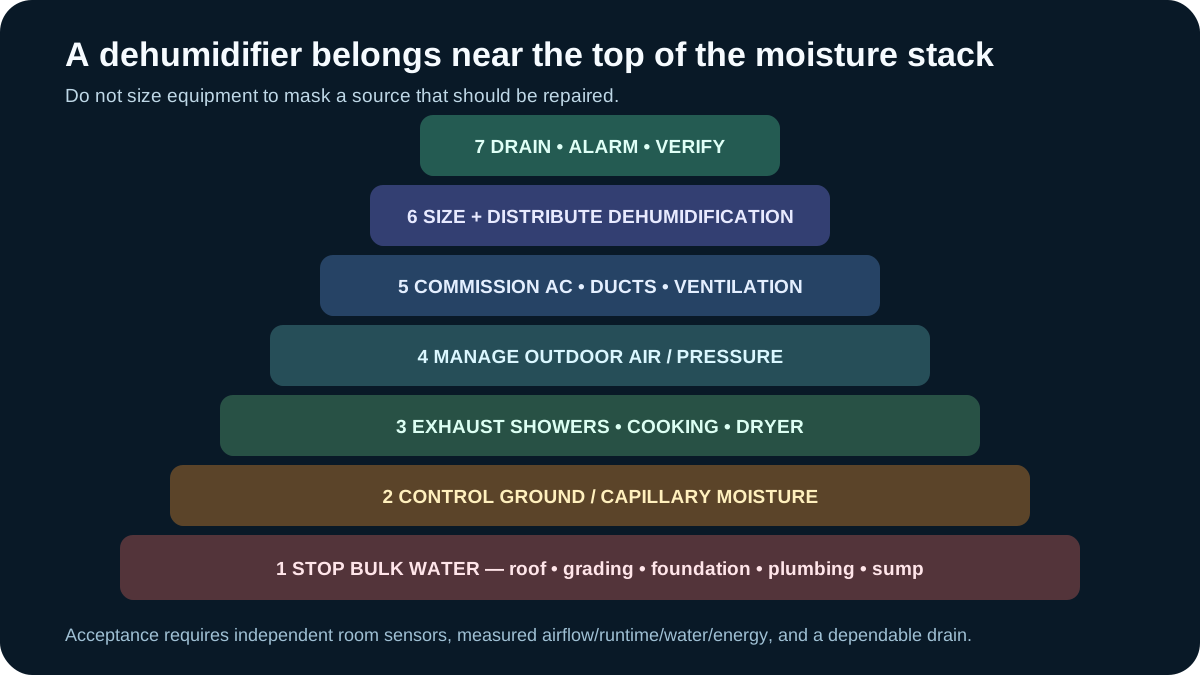
The Moisture-Control Stack
Work upward. A larger dehumidifier at the top should not be used to mask failures below it.
- Stop bulk water: roof, grading, foundation, plumbing, appliance, drain, sump, and groundwater.
- Control capillary and ground vapour: assemblies, crawlspace ground cover, drainage, and compatible materials.
- Exhaust sources: bath, kitchen, and dryer paths that actually terminate outdoors as required.
- Manage outdoor air: intentional ventilation, infiltration, open windows, pressure, and humid-weather operation.
- Commission cooling: correct capacity, airflow, coil, drain, fan/control, ducts, and runtime.
- Add dehumidification: only for the remaining measured latent load.
- Drain and verify: dependable condensate, alarms, filters, room mixing, energy, and recurrence.
Trace the Moisture Source Before Equipment Sizing
Rain and groundwater
Look for dampness after rain, efflorescence, wet cracks, staining, sump activity, blocked gutters, downspout discharge, negative grading, window-well water, and floor/wall junction seepage. A dehumidifier may remove some evaporated water while the structure continues getting wet.
Use the basement moisture and insulation guide before covering walls or floors. Do not seal wet materials into an assembly.
Plumbing and appliances
Check supply/drain piping, water heater, condensate, washing machine, dishwasher, refrigerator, humidifier, softener, sump, and floor drain. Mark the first wet edge and timing. Shut off active water safely and use qualified repair.
Indoor generation
Showers, cooking, wet laundry, aquariums, many plants, stored firewood, damp materials, and occupants add moisture. Verify bath and kitchen exhaust function and termination. A dryer that vents indoors or through a failed duct is a moisture and lint/fire problem, not a dehumidifier load.
Outdoor-air entry
Humid outdoor air enters through intentional ventilation and leakage. Opening basement windows on a warm humid day can raise moisture even if the air feels fresh. Use outdoor dew point or humidity ratio—not outdoor RH alone—to judge drying potential.
Cold surfaces
Condensation on cold pipes, ducts, slab edges, walls, or windows may be controlled by source reduction, compatible insulation, air sealing, temperature control, or dehumidification. Identify why the surface is below dew point rather than wiping it indefinitely.
Why AC Sometimes Does Not Control Humidity
An air conditioner removes sensible heat (temperature) and latent heat (water vapour) while its coil is cold and wet. High indoor RH can persist when:
- cooling demand is low during rainy/shoulder-season weather;
- equipment is oversized or short-cycles;
- airflow/control setup prioritizes sensible capacity;
- fan runs continuously and re-evaporates coil water in some systems;
- coil or drain is dirty/restricted;
- refrigerant/airflow performance is wrong;
- ducts leak or draw humid unconditioned air;
- ventilation introduces more moisture than expected;
- thermostat is satisfied in one zone while another stays humid;
- doors/returns prevent mixing.
DOE Building America research documents the mismatch between reduced sensible loads and persistent latent loads in efficient hot-humid homes. That makes supplemental control a legitimate design option, not proof that every tight home needs the same dehumidifier.
Have cooling capacity, airflow, static pressure, coil temperature, condensate, fan mode, controls, ducts, ventilation, and room load checked before adding another compressor.
Compare Three Control Paths
Correct or tune the AC/ventilation system
This can be appropriate when high RH is caused by oversizing, wrong airflow, continuous fan, duct leakage, failed drain, or ventilation/control setup. Some variable-speed systems offer latent-control modes, but settings must remain within equipment requirements and avoid coil freezing or comfort problems.
Portable zone dehumidifier
Useful for one basement, crawlspace, or room when air can circulate and a safe drain/receptacle exists. It adds heat to that zone, occupies floor space, and requires tank/drain/filter service. It may not control closed rooms upstairs.
Ducted whole-house dehumidifier
Useful when the latent load spans multiple rooms or must be controlled independently of cooling. It requires a designed intake/discharge path, pressure and airflow assessment, condensate, electrical supply, controls, filters, access, sound planning, and commissioning.
“Whole house” on a carton does not prove whole-building distribution. Closed doors, weak return paths, zoning dampers, and duct layout determine reach.
Size From Moisture Load, Not Square Feet Alone
Capacity is commonly rated in pints removed per 24 hours at specified test conditions. Actual removal declines or changes with entering temperature and RH, airflow, defrost, filter condition, duct pressure, and setpoint.
ENERGY STAR's portable sizing table uses space area and wetness condition as a consumer screen. A whole-house design should also consider:
- climate and outdoor moisture;
- enclosure leakage;
- mechanical ventilation airflow and schedule;
- occupants and indoor sources;
- basement/crawlspace ground connection;
- measured existing removal;
- room mixing and ducts;
- temperature at equipment location;
- target RH and acceptable recovery time;
- AC latent removal;
- peak versus seasonal load.
If replacing a working unit, collect its daily condensate over representative conditions and record runtime, entering RH/temperature, and whether it maintained target. A bucket count without weather and runtime is incomplete.
A measured-load screen
Suppose an existing portable unit removes 35 pints during a humid 24-hour period, runs 20 hours, and the farthest room still reaches 62% RH. Do not simply buy a 42-pint unit. Determine whether:
- 35 pints is actual collected water or a label rating;
- drainage/source problems are adding load;
- the unit is frosting/defrosting;
- air cannot reach the far room;
- the sensor is in dry discharge air;
- ventilation/AC operation changed;
- a ducted distribution solution is needed;
- a higher-capacity unit has adequate efficiency and part-load control.
Capacity and distribution are separate gates.
Convert Collected Water Into a Useful Load Record
When a portable unit drains to a bucket or marked container, a supervised collection test can reveal the order of magnitude of the moisture load. Do not interrupt an essential drain or allow overflow to obtain a measurement.
Record for each 24-hour period:
| Input | Observation |
|---|---|
| Water collected, pints/litres | |
| Compressor/fan runtime | |
| Entering temperature/RH | |
| Farthest-room temperature/RH | |
| Outdoor condition and rain | |
| AC and ventilation operation | |
| Doors/windows and moisture events | |
| Energy kWh if safely measured |
Repeat during dry, rainy, and design-humid weather. If 20 pints are collected while RH falls rapidly below target, that is not proof of a 20-pint peak design load; some water came from initially wet air and moisture stored in furnishings/materials. If 20 pints are collected while RH continues rising, the actual load may be higher or distribution/source control may be failing.
For a continuous drain, an inline condensate measurement device should be compatible, cleanable, and installed without restricting flow or violating the manual. A technician can use timed volume, runtime, and entering/leaving conditions. Do not estimate capacity from condensate-pipe diameter.
Write a Seasonal Control Sequence
The building needs different responses during hot-humid cooling, mild rainy shoulder season, cold weather, vacancy, and a bulk-water event.
Define:
- humidity target range by season and sensor authority;
- when AC, dehumidifier, central blower, and ventilation may run together;
- how zoning and closed rooms receive dry air;
- low-temperature lockout/defrost behaviour;
- high-RH alarm and notification;
- condensate pump/overflow shutdown;
- response after power loss;
- vacation and unoccupied settings;
- maximum runtime that triggers inspection;
- who changes filters and tests alarms.
Do not use a winter dehumidifier setpoint that drives already-dry living spaces lower merely because a cold basement sensor reads high RH. Examine temperature, surface condensation, moisture source, and dew point. Conversely, do not disable a system for shoulder season when that is the period with the highest measured latent load.
Keep the control narrative beside the equipment manual and commissioning data. A future thermostat replacement or ventilation schedule change can otherwise break humidity control without any dehumidifier fault.
Compare Efficiency With Integrated Energy Factor
ENERGY STAR dehumidifier efficiency uses an integrated energy factor expressed as litres of water removed per kilowatt-hour under the applicable test. Higher litres/kWh means more standardized moisture removal per unit of electricity.
For exact models, record:
| Model | Rated pints/day | Test condition | Integrated energy factor L/kWh | Input | Temperature range | Drain method |
|---|---|---|---|---|---|---|
| A | ||||||
| B | ||||||
| C |
A planning equation is:
Electricity kWh = litres removed ÷ rated litres per kWh
Actual energy includes fan/standby/defrost/control behaviour and depends on conditions. Do not promise savings from rating alone.
Use a suitable plug meter only for a compatible portable unit within voltage/current/startup/environment ratings. Whole-house hardwired or high-load circuits require equipment data or qualified measurement.
Duct Design: Avoid Short-Circuiting Dry Air
Common arrangements include dedicated return and dry-air supply, return-to-supply integration, or other manufacturer-engineered paths. Each affects fan interaction, pressure, mixing, and backflow.
The designer should document:
- dehumidifier airflow at actual external static pressure;
- duct size, length, fittings, insulation, and leakage;
- intake and discharge separation;
- backdraft dampers where required;
- central blower interlock or independent operation;
- zoning damper behaviour;
- return paths from closed rooms;
- temperature rise from dehumidifier operation;
- access for filter, coil, drain, and service;
- sound transmission through grilles/ducts;
- fire/smoke and code requirements.
Returning dry air directly into an adjacent intake can create an easy short loop while the house remains humid. Connecting to a central supply without considering blower status can push air through the wrong path. Follow the exact equipment design and qualified HVAC engineering.
Do not install a ducted dehumidifier in a hot attic or cold space unless rated and designed for those conditions. Condensation can form on ducts/cabinet when surfaces cross dew point; compatible insulation and vapour control matter.
Ventilation and Dehumidification Must Be Coordinated
Mechanical ventilation can improve indoor air quality while adding or removing moisture depending on outdoor conditions and equipment. Do not shut off required ventilation merely to lower RH.
Document:
- ventilation type and measured airflow;
- schedule/boost controls;
- outdoor-air duct and damper;
- ERV/HRV operation, drain, filters, and balance;
- whether a dehumidifier has a ventilation-air connection;
- control priority during cooling, shoulder season, and vacancy;
- pressure effects with exhaust fans and combustion appliances.
A dehumidifier that introduces outdoor air is not automatically a complete ventilation system. Verify filtration, distribution, flow, controls, and code separately.
Condensate Is a Reliability System
A whole-house unit can remove many litres of water. The drain must work unattended.
Specify:
- gravity slope and pipe support;
- trapped/vented configuration required by equipment;
- approved receptor and air gap/backflow protection;
- condensate pump capacity, alarm, and overflow switch when used;
- cleanout and service access;
- freeze protection without unsafe heat;
- route away from electrical equipment and finishes;
- secondary protection for sensitive locations;
- test method under full flow.
Do not drain into soil in an enclosed crawlspace, onto a floor, or into a sump/receptor without confirming suitability and local requirements. An alarm without an automatic stop may only report damage after it begins.
Pouring water into a pan does not always prove the appliance produces and drains condensate under pressure. Commission during actual dehumidification and test safety controls.
Electrical, Refrigerant, and Fire Safety
Portable units should connect directly as the manual specifies. Do not use extension cords, ordinary smart plugs, or adapters. Ducted units may need dedicated circuits and service disconnects installed under code.
Stop for:
- hot plug/receptacle/wiring;
- repeated breaker/protection trips;
- burning/electrical odour;
- smoke or scorched components;
- refrigerant-tube damage or oily residue;
- fan contact or abnormal grinding;
- water at electrical parts;
- official stop-use recall.
Dehumidifiers have been subject to significant fire recalls. Search CPSC and manufacturer records with exact model and serial, especially before buying used or moving an older unit to another room.
Do not open a sealed refrigerant system. Some products use flammable refrigerants; recovery, brazing, charging, and internal electrical work require qualified service.
Commission With Acceptance Criteria
Before installation, agree on:
- rooms included;
- target range and sensor locations;
- outdoor/indoor design condition;
- maximum acceptable runtime/noise;
- expected temperature effect;
- measured airflow and static-pressure limits;
- condensate and overflow test;
- ventilation/AC interlocks;
- energy monitoring method;
- recovery expectation after a moisture event;
- service/filter clearance;
- documentation and warranty.
Then log at least two weeks across representative weather:
| Date | Outdoor condition | Room RH range | Runtime | Water removed | kWh | AC/ventilation state | Drain/alarm |
|---|---|---|---|---|---|---|---|
Acceptance is not “humidistat says 50%.” Verify independent sensors in the hardest rooms, no condensation, reliable drain, no harmful pressure/temperature side effect, and reasonable energy.
Worked Decision: Damp Basement or Whole-House Load?
A home logs 65% RH in an unfinished basement after rain, 48–52% on the main floor, and no upstairs condensation. The basement wall/floor junction shows wetness and the downspout discharges beside the foundation.
This is not yet a whole-house dehumidifier case. Correct drainage/bulk water, dry affected materials, and remeasure. A portable basement unit may control remaining vapour during the work if safely installed and drained, but sizing it to “fight” the downspout hides the source.
Another home logs 58–65% in bedrooms and living areas during mild rainy weather. Bulk water checks pass; bath/dryer exhaust works; ventilation airflow is verified; the correctly sized AC rarely runs; doors reduce mixing. That evidence supports comparing a distributed ducted unit, improved return paths, and HVAC/ventilation control changes. The quote must prove airflow to closed rooms and drain/energy acceptance—not just list pints/day.
Quote Comparison Worksheet
Ask each bidder for:
- model and certified capacity/efficiency;
- sizing basis and measured moisture sources;
- entering-condition performance;
- duct diagram, airflow, static pressure, dampers, grilles, and insulation;
- interaction with central blower, zoning, thermostat, and ventilation;
- electrical scope;
- condensate, pump, alarm, overflow shutdown, and receptor;
- equipment location, sound, and service clearance;
- controls/sensors and calibration;
- commissioning readings and log period;
- maintenance, filter, parts, labour, and refrigerant warranty;
- permits and code responsibility;
- full installed price and exclusions.
Reject claims that the unit will “kill all mold,” guarantee a health outcome, pay for itself by raising the thermostat, or solve groundwater without repair. Require measurable moisture and operating outcomes.
Maintenance and Troubleshooting
Follow the exact manual for filters, coil access, drain cleaning, pump tests, storage, and service. Keep a monthly log of RH by room, runtime, energy if available, drain/alarm, filter condition, and weather.
If a unit runs continuously but RH stays high, check:
- sensor placement/calibration;
- new bulk water or plumbing source;
- open windows/doors or ventilation change;
- dirty filter/coil;
- frost/defrost or low entering temperature;
- blocked airflow or duct short-circuit;
- drain/pump/full-tank state;
- capacity versus actual load;
- refrigerant, fan, compressor, or control fault.
Do not lower the setpoint indefinitely. That increases runtime and may create cold-surface condensation elsewhere without fixing the source.
Commission the Ducted Air Path
Pint capacity at a test condition does not prove the installed system reaches closed rooms. Record, as applicable:
- dehumidifier entering and leaving temperature/RH;
- airflow and external static pressure at required speed;
- return and supply pressure relationships;
- damper positions and interlocks;
- central blower status during dehumidification;
- bedroom/remote-room response with doors in normal position;
- outdoor-air ventilation state;
- condensate rate, drain slope, risk/pump, overflow shutdown, and alarm;
- whole-system power, not just compressor nameplate;
- sensible heat effect on cooling operation;
- filter pressure/condition baseline.
If the unit draws from one zone and supplies another, confirm it does not depressurize a combustion-appliance space, pull crawlspace/garage contaminants, or short-circuit dry air back to its own return. A qualified designer should reconcile dehumidifier airflow with HVAC zoning and ventilation.
Acceptance test
Operate through representative mild-humid and hot-humid periods. Independent sensors in the most difficult rooms should approach the design band without one zone becoming excessively dry or warm. Trigger the full condensate safety sequence by an approved test, confirm recovery after power interruption, and document what happens if the pump, sensor, damper, or central blower fails.
The installer should leave final setpoints, sensor locations, airflow settings, drain diagram, filter number, maintenance schedule, warranty, and baseline readings. “Set to 50%” is not commissioning.
Frequently Asked Questions
Does every tight house need a whole-house dehumidifier?
No. Measure humidity and sources, commission AC/ventilation, and size supplemental equipment only for the remaining load.
What humidity should I set?
EPA moisture guidance says below 60% and ideally 30–50% where possible. Choose an achievable building- and season-appropriate target with verified sensors, comfort, materials, and condensation risk.
Will a dehumidifier cool the house?
It removes moisture but releases compressor/fan energy plus latent heat back as sensible heat, so its discharge is usually warmer. Coordinate it with cooling.
Can I size only from square feet?
Area is a screening input. Whole-house sizing needs climate, sources, ventilation, enclosure, measured removal, conditions, distribution, and target/recovery time.
Should the central HVAC fan run with it?
Only as the designed control sequence requires. Fan operation can improve distribution or create unwanted duct flow/re-evaporation; document the exact integration.
Can condensate go to the sump?
Only if equipment instructions, receptor design, local plumbing/building rules, water quality, and overflow risk permit. Specify a reliable approved drain path.
Does dehumidification eliminate existing mold?
No. Moisture control helps prevent recurrence, but existing contamination and wet materials require appropriate assessment/cleanup and source repair.
What to Read Next
Trace bulk water before finishing with the basement moisture retrofit guide. For below-grade air and soil conditions, use the crawlspace encapsulation guide. Size a zone appliance with the portable dehumidifier guide, and diagnose bill impact with the summer interval-data guide.
Sources and Verification
Capacity, portable/whole-house selection, and efficiency claims use ENERGY STAR dehumidifier guidance and the DOE consumer-dehumidifier page. Moisture-source and indoor-humidity claims use the EPA mold/moisture guide and biological-contaminants guidance. Ducted warm-humid design context comes from DOE humidity-control research. Recall status must be checked through CPSC. Exact load, equipment data, drainage, controls, local rules, and commissioning govern the project.
Sources and Verification
- ENERGY STAR: Dehumidifiers
- U.S. DOE: Consumer Dehumidifiers
- U.S. EPA: A Brief Guide to Mold, Moisture and Your Home
- U.S. EPA: Biological Contaminants and Indoor Air Quality
- U.S. DOE: Advanced HVAC Humidity Control for HotHumid Climates
- U.S. DOE Building America: Supplemental Dehumidification in WarmHumid Climates
- CPSC: Dehumidifier Recalls
Editorial Review
EnergyBS Editorial Team
EnergyBS publishes practical homeowner guides. Important program, product, and cost claims should be checked against the linked source and local project documents before you commit to work.
Related Guides
View All ArticlesPortable Dehumidifier Sizing and Placement 2026 Analysis
Size and place a portable dehumidifier using space area, uncontrolled moisture condition, temperature, air connection, drainage, electrical supply, sound, filtration, energy, heat release, commissioning, and sourcecontrol evidence.
Basement Insulation and Mold Prevention 2026 Tool
Diagnose bulk water, capillary moisture, humidity, condensation, soil gas, and hidden damage before choosing a basement wall, rimjoist, or floor insulation assembly.
Crawlspace Encapsulation vs Vented Crawlspace
Decide whether to seal and condition a crawlspace or retain a vented assembly after resolving bulk water, radon, pests, combustion, insulation, drainage, and flood constraints.