Cool Roof vs. Green Roof (2026 Guide & Data)
A rooffirst decision guide comparing reflective and vegetated roofs through climate, assembly, solar reflectance, thermal emittance, insulation, structural loads, drainage, fire, maintenance, and lifecycle cost.
The Short Answer
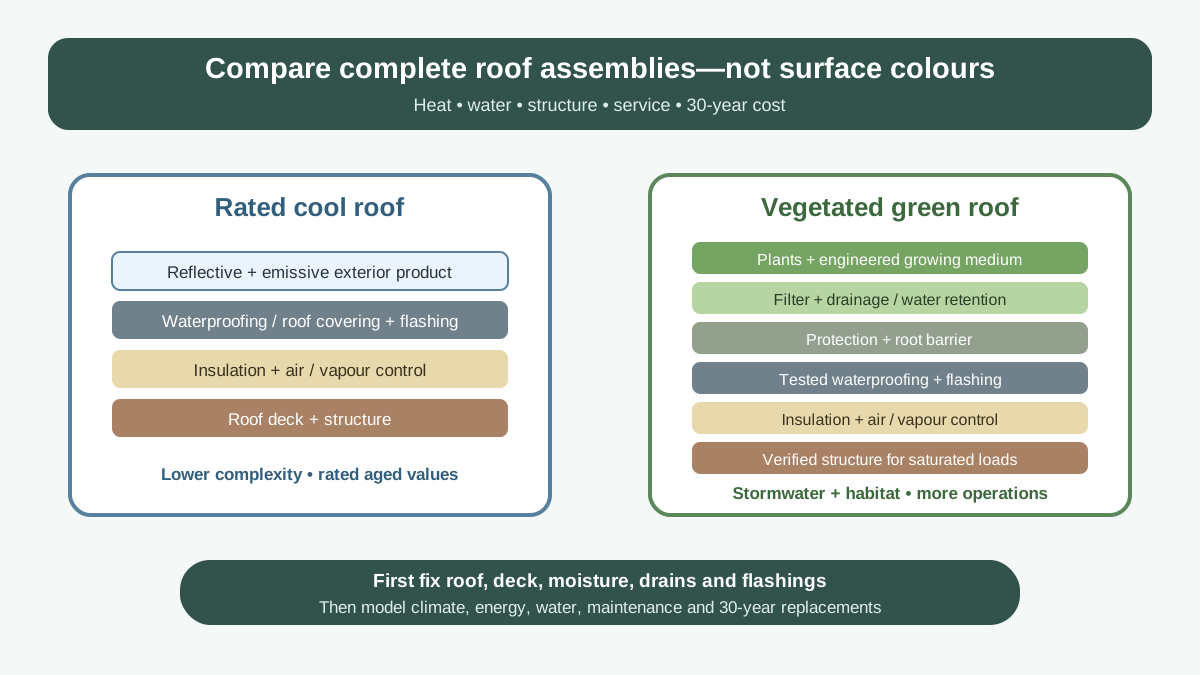
Short Answer: A cool roof is usually the lower-complexity option when the roof already needs replacement and the goal is to reduce solar heat gain with a rated reflective/emissive roofing product. A green roof is a separate roof-and-landscape system that can add shade, evapotranspiration, stormwater detention, habitat, and amenity value, but it requires structural verification, waterproofing/root protection, drainage, overflow, irrigation/establishment, fire and wind design, access, and ongoing horticultural maintenance.
Do not decide from surface-temperature photos or a universal cooling-savings percentage. Compare both options on the same roof replacement boundary using climate, roof slope and area, insulation, attic/plenum conditions, HVAC, reflectance/emittance aged values, saturated green-roof loads, stormwater requirements, membrane/service access, maintenance, water, permits, insurance, and 30-year cost.
Three Different Decisions Are Often Blended
Separate these questions:
- Does the roof assembly need repair or replacement? Leaks, drainage, deck damage, flashing, condensation, or expired membrane come first.
- Should the new exterior surface be more solar reflective? This is the cool-roof decision.
- Should the roof become a vegetated stormwater/amenity assembly? This is the green-roof decision.
A coating is not a substitute for failed flashing or wet insulation. Plants are not waterproofing. A highly insulated vented attic does not erase roof durability, but it can reduce the building-energy difference among surface choices. Keep every benefit attached to the system that actually produces it.
The Roof Decision Section
Complete one column per option:
| Design input | Conventional/reference | Cool roof | Green roof |
|---|---|---|---|
| Roof type/slope/area | |||
| Existing deck and moisture | |||
| Waterproofing/flashing scope | |||
| Initial and aged reflectance | |||
| Thermal emittance | |||
| Insulation/air-sealing scope | |||
| Dead/saturated/live/snow loads | |||
| Wind/fire/code design | |||
| Drainage and emergency overflow | |||
| Stormwater performance | |||
| Irrigation/planting/access | |||
| Annual inspection/maintenance | |||
| Water and cleaning | |||
| Energy model: heating/cooling | |||
| 30-year replacements | |||
| 30-year low/base/high cost |
The table prevents a common comparison error: quoting only reflective material for one option and a complete roof rebuild for another.
How a Cool Roof Changes Heat Flow
Solar radiation reaches the roof. Some is reflected; the rest is absorbed. The warm surface transfers heat through radiation, convection, and conduction into the roof assembly and surrounding air.
Solar reflectance
Solar reflectance is the fraction of incoming solar energy reflected by the surface. Higher reflectance generally lowers absorbed solar energy. “White,” “light,” or “metal” is not a measured rating. Pigments, coatings, granules, texture, aging, and soiling matter.
Thermal emittance
Thermal emittance describes how effectively a surface emits absorbed heat as thermal radiation. DOE advises considering reflectance, durability of reflectance, and high emittance. Bare/unpainted metal can have useful reflectance but relatively low emittance; evaluate the exact rated product rather than applying a material stereotype.
Solar reflectance index
Some codes and programs use a combined index derived from reflectance and emittance under specified conditions. It is helpful for compliance comparisons but is not a direct percentage of HVAC energy saved.
Initial versus aged performance
A roof can accumulate dirt, biological growth, pollution, ponding residue, and material changes. Obtain initial and aged rated values where the applicable standard/program uses them. Include safe manufacturer-approved cleaning and maintenance only when it is realistic.
The Cool Roof Rating Council directory provides independent rating information for roofing products; a rating is not itself a warranty, code approval for every assembly, or savings guarantee.
How a Green Roof Changes Heat and Water
A green roof adds layers above the waterproofing that can include protection, root barrier, drainage/reservoir elements, filter fabric, engineered growing medium, plants, irrigation, and access/pavers.
Cooling mechanisms include:
- plant and medium shade over the membrane;
- evapotranspiration when moisture is available;
- heat storage and delayed transfer in the assembly;
- reduced direct solar and temperature cycling at waterproofing;
- different convective and radiative exchange.
Performance changes with plant cover, water availability, growing-medium depth and moisture, climate, wind, season, roof area, insulation, and maintenance. A dry, sparse, stressed roof is not equivalent to a healthy irrigated test roof. Evapotranspiration consumes water; include the source, pumping, controls, drought rules, and water price.
EPA distinguishes extensive green roofs, often shallower and lower-maintenance, from intensive roof gardens with deeper media, larger plants, more structure, access, and maintenance. These are categories, not load values. The structural engineer needs the actual assembly and saturated design conditions.
Inspect the Existing Roof Before Comparing Enhancements
Document:
- roof age, warranty, leak/service history;
- membrane/shingle/metal condition;
- deck type, spans, deterioration and deflection;
- insulation type, location, thickness, attachment, wet areas;
- air/vapour control layers and interior humidity;
- drains, scuppers, gutters, overflow and ponding;
- parapets, curbs, penetrations, flashings and expansion joints;
- mechanical equipment and service routes;
- roof slope, solar exposure, shade, wind and snow drift;
- safe access, fall protection and emergency paths;
- solar panels or planned solar.
Use appropriate moisture investigation before covering an existing assembly. Encapsulating wet insulation or damaged deck can conceal deterioration. If the roof is leaking, diagnose the source; a reflective coating or planting layer can complicate later repair.
Climate and Building Type Determine Energy Value
DOE states that cool roofs generally provide the greatest cooling benefit in hot climates and can create a winter heating penalty by reducing useful solar heat gain in colder climates. EPA notes the penalty is often moderated by shorter winter days, low sun, insulation, and snow cover. Model it rather than assuming zero or dominance.
Important inputs:
- cooling and heating degree conditions;
- solar radiation and cloud cover;
- roof orientation/slope;
- snow cover and maintenance;
- attic versus compact/low-slope roof;
- insulation and air leakage;
- ducts/equipment in attic or rooftop space;
- HVAC efficiency and schedules;
- internal loads and occupancy;
- roof-to-floor-area ratio;
- electricity/fuel tariff by season/time.
A one-story retail building with a large exposed low-slope roof can have a different energy case from a three-story insulated house with a small steep roof. A dark roof above an unconditioned, well-vented, highly insulated attic does not transfer the same fraction of solar heat as an uninsulated compact roof.
Model Energy Without a Universal Percentage
Require annual heating and cooling energy for a defined baseline and weather file. Show:
- roof solar absorptance/reflectance and emittance;
- aged value assumption;
- insulation and thermal bridges;
- interior and attic conditions;
- HVAC type, efficiency and schedules;
- green-roof moisture/evapotranspiration assumptions;
- peak demand and annual energy;
- low/base/high cases.
Price electricity and fuel using relevant marginal rates. Peak cooling reduction can have grid and demand value even if annual household dollar savings are modest. Keep peak kW and annual kWh separate.
If a proposal says “reduces AC by 20%,” ask whether that means roof heat flow, peak cooling load, HVAC runtime, or whole-building annual electricity. Those are different denominators.
Roof Coatings Are Not Generic Paint
A coating project needs a compatible, prepared substrate and designed system. Specify:
- existing roof type and condition;
- adhesion/moisture tests;
- cleaning and contaminant removal;
- repair of seams, fasteners, blisters, penetrations and drainage;
- primer where required;
- product, application rate, dry thickness and number of coats;
- weather window, curing and quality control;
- walk pads and equipment-service zones;
- warranty inspection and maintenance.
Do not coat a roof merely to extend it beyond a defensible service condition. Some assemblies are not suitable, and a coating can affect future repair or warranty. Obtain manufacturer acceptance for the complete substrate/detail combination.
Cool Roofing by Roof Type
Low-slope membranes
Options can include reflective single-ply, coated/modified assemblies, reflective coatings, or surfaced systems. Compare seam/detailing, puncture resistance, compatibility, drainage, attachment, wind/fire classification, repair method, and aged reflectance.
Asphalt shingles
Cool-rated shingles can use reflective granules while retaining darker visible colours. Compare exact product rating, roof ventilation/assembly, underlayment, flashing, wind/fire/hail classification, local availability, and aesthetics. Do not coat ordinary shingles unless the roof and coating manufacturer explicitly approve the system.
Metal roofing
Evaluate a factory-applied coating and its rated reflectance/emittance, not bare-metal assumptions. Include condensation control, underlayment, fasteners/clips, thermal movement, corrosion environment, snow shedding, glare and neighbour impacts.
Tile or other products
Mass, air space, colour, glaze/pigment, installation and roof geometry influence performance. Product rating must be paired with a compliant structural/waterproofing assembly.
Structural Design for a Green Roof
Do not use generic pounds per square foot. The structural design should include, as applicable:
- existing dead load;
- waterproofing, protection, drainage, medium and plants;
- saturated/retained water;
- snow, rain-on-snow and drifting;
- maintenance workers and equipment;
- public occupancy, planters, pavers, furniture or guard loads;
- wind uplift/scour and edge/corner zones;
- seismic effects where applicable;
- temporary construction stockpiles and crane placement;
- future plant growth and irrigation lines.
The heaviest construction condition can occur when pallets or bags are concentrated before spreading. The structural engineer should define staging limits and verify the existing building, not only roof joists from a typical table.
Record stamped plans, assumptions, inspection, as-built changes, and future load restrictions. Never add decorative planters later without checking the design.
Waterproofing, Root Protection, and Leak Detection
The waterproofing membrane remains the primary water-control layer. Require:
- membrane compatible with green-roof system;
- continuous flashing and penetration details;
- root barrier where required;
- protection layer against construction/maintenance damage;
- flood/electronic or specified integrity testing before covering;
- drainage and overflow test;
- separation/filter layers;
- access to drains and critical flashings;
- leak-detection zones or ports where designed;
- documented repair procedure.
Photograph and map the membrane, seams, penetrations, drains and test results before installing overburden. Later leak investigation can require removing plants and medium, so compartmentalization and records add value.
Do not claim vegetation automatically multiplies membrane life. It can shield ultraviolet radiation and temperature swings, but roots, trapped water, blocked drains, puncture, poor detailing, incompatible materials, and delayed leak detection can shorten service.
Drainage, Overflow, and Stormwater
Green roofs can retain and slow rainfall, but retention varies with antecedent moisture, storm size/intensity, season, medium depth, plants, roof area and climate. EPA notes performance is greater for smaller events and depends on rainfall patterns. Do not claim 100% capture for every storm.
The hydrologic design should state:
- design storms and local criteria;
- retention/detention method;
- drainage-layer flow;
- outlet/control details;
- primary drains and emergency overflow;
- ponding limits and roof slope;
- irrigation contribution;
- water-quality/overflow destination;
- inspection after storm and winterization;
- interaction with cisterns or reuse.
Keep drains visible and serviceable. Vegetation, roots, filter fabrics, gravel and debris must not obstruct overflow. If stormwater fees or requirements create value, obtain official calculation and approval.
Plants, Growing Medium, and Irrigation
Select a designed plant community, not a generic sedum tray. Inputs include:
- winter/summer temperature;
- sun, wind and reflected heat;
- drought and rainfall pattern;
- growing-medium properties, depth and saturated weight;
- drainage and root environment;
- native/invasive-species considerations;
- fire resistance and dry biomass;
- irrigation source and water quality;
- establishment period;
- access and replacement strategy;
- desired habitat or amenity outcome.
Define acceptance after at least one establishment period: coverage, mortality/replacement, weeds, irrigation, erosion/scour, drain access and bare zones. A warranty that covers only delivery-day plant condition is not a performance plan.
Fire, Wind, Snow, and Safety
Both roof types must meet applicable roof-covering, assembly, wind-uplift, fire, drainage, structural and energy rules. Green roofs add questions about dry vegetation, fire breaks, pavers, edge zones, irrigation outages and emergency access. Cool roofs can add glare or snow-shedding considerations depending on product and geometry.
Document:
- adopted code and permits;
- rated/listed roof assembly;
- attachment and perimeter/corner wind design;
- vegetation/fire breaks and maintenance;
- lightning/electrical/solar coordination;
- guardrails, ladders, hatches, anchors and fall protection;
- snow removal restrictions;
- emergency routes and signage;
- worker loading and safe wet/icy access.
Do not send homeowners onto a roof to clean or garden without a designed safe-access and fall-protection plan.
Integrate Solar, HVAC, and Other Roof Equipment
Plan roof uses together. Solar modules can shade roof surfaces while needing setbacks, drainage, fire paths and service access. A green roof may coexist with solar, but structure, wind, vegetation height, irrigation spray, electrical routing and maintenance must be coordinated.
For rooftop HVAC, keep clearances, air intakes, exhausts, condensate, replacement route, sound and service pads. Vegetation should not block coils or introduce debris. Reflective surfaces can affect surrounding equipment temperatures, but quantify rather than promise efficiency.
If solar is expected, use the roof-before-solar guide before final roofing scope.
Maintenance Is Part of the Design
Cool-roof maintenance plan
- roof/drain/flashing inspection schedule;
- safe cleaning method and threshold;
- coating/membrane repairs;
- traffic and equipment-service protection;
- reflectance remeasurement if required by a program;
- warranty reporting;
- post-storm inspection.
Excessive or harsh cleaning can damage the surface, while no cleaning can reduce reflectance. Follow the roof manufacturer's instructions and protect runoff.
Green-roof maintenance plan
- establishment watering and inspections;
- seasonal irrigation settings and winterization;
- plant replacement, weeding and pruning;
- removal of dry biomass;
- drain, overflow and flashing access;
- erosion/scour and medium settlement;
- pests/invasive species;
- leak/moisture monitoring;
- fertilizer/chemical limits;
- safe access and work logs.
Price labour, water and replacement plants. A “low maintenance” system is not no maintenance.
Build the 30-Year Life-Cycle Ledger
| Cost/value | Conventional | Cool roof | Green roof |
|---|---|---|---|
| Design/engineering/permits | |||
| Tear-off, repair, waterproofing | |||
| Reflective product/coating | n/a/partial | ||
| Structure/green-roof layers | n/a | n/a | |
| Drainage/overflow | |||
| Access/safety | |||
| Annual heating/cooling cost | |||
| Peak demand value | |||
| Cleaning/inspection | |||
| Water/horticulture | n/a | n/a | |
| Repairs/leak investigation | |||
| Recoat/recover/replacement | |||
| Stormwater credit/value | |||
| Amenity/ecology value | |||
| 30-year low/base/high total |
Separate private bill savings from community heat-island, habitat and stormwater benefits. They are real decision factors but may accrue to different parties.
Worked energy screen
Suppose a model estimates a cool roof reduces annual cooling electricity by 420 kWh but increases heating energy by the equivalent of $18/year. At $0.21/kWh, cooling value is $88.20; net first-year energy value is about $70.20. If the incremental installed cost over an otherwise-required roof replacement is $900, simple energy-only payback is roughly 12.8 years.
This is an illustrative method. Replace climate, model, roof area, HVAC and rates. Add maintenance and any peak-demand value. Do not compare the $900 incremental cool-roof cost with the full price of a green roof that also provides stormwater or amenity service.
Quote Requirements
Send every bidder the same existing-condition report and ask for:
- roof areas/slopes and assembly;
- moisture/deck investigation;
- tear-off/repair and insulation scope;
- exact products and rated initial/aged properties;
- compatibility and preparation;
- flashing, penetration, drainage and overflow details;
- structural/wind/fire/code design;
- green-roof saturated loads and layers;
- irrigation/plants/establishment where applicable;
- safe access and protection;
- commissioning/testing and acceptance;
- annual maintenance and owner training;
- warranties split among membrane, coating, vegetation, labour and structure;
- allowances, exclusions and unit prices;
- 30-year repair/replacement schedule.
Compare bids after normalizing square area, roof repair, insulation, access and warranty. A low coating price can omit preparation; a green-roof tray price can omit structure, membrane, crane, irrigation and maintenance.
Commission and Preserve Records
Collect:
- stamped/approved plans and permits;
- deck/insulation/moisture repairs;
- membrane and flashing photos;
- integrity/flood/drainage test;
- product labels, lot numbers and rated values;
- coating coverage/thickness records;
- structural and anchorage inspections;
- green-roof layer and saturated-load documentation;
- irrigation and overflow test;
- plant inventory and establishment acceptance;
- as-built drains, compartments, utilities and access paths;
- maintenance/warranty contacts;
- baseline roof/attic/indoor temperature and energy data where planned.
Review after the first major storm, first hot period and first winter. Correct ponding, blocked drains, erosion, wind scour, plant loss, coating damage, leaks or unsafe access promptly.
Decision Patterns
Low-slope roof due for replacement in a hot climate
A rated cool membrane or compatible reflective system deserves direct comparison with the conventional replacement. Model aged reflectance, insulation, drainage and maintenance. The incremental cost may be small when timed with replacement.
Steep residential roof in a heating-dominated climate
Cool-rated shingles/metal may still provide summer comfort and heat-island value, but model winter effects and attic insulation. Colour/aesthetics, snow, glare, code and product availability matter.
Commercial or multifamily roof with stormwater requirement
A green roof can combine detention, heat, amenity and habitat services. Structural capacity, membrane compartments, access, fire/wind, maintenance funding and tenant safety become central.
Existing roof with leaks and wet insulation
Neither a coating nor vegetation is the first step. Locate leaks, remove/replace wet material, repair structure and establish a warranted waterproofing assembly.
Owner wants a rooftop garden
An accessible intensive roof is occupied landscape and structure, not just energy efficiency. Include guards, egress, accessibility, irrigation, public loads, soil/planters, fire, lighting and operations.
Solar planned within five years
Resolve roof life and layout now. Coordinate inverter/electrical routes, setbacks, drainage and service. Avoid paying to remove solar for an avoidable roof replacement.
Red Flags
- surface-temperature photo used as annual savings proof;
- one reflectance value without exact product or aged performance;
- coating specified over leaks/wet insulation without investigation;
- green roof without structural engineer and saturated loads;
- plants treated as waterproofing;
- no emergency overflow or drain access;
- no fire/wind/edge-zone design;
- generic weight or retention percentage;
- “maintenance free” claim;
- membrane covered before integrity testing/photos;
- energy savings that ignore winter and insulation;
- lifetime claim without warranty maintenance terms;
- roof access/gardening without fall protection;
- benefits counted twice in financial model.
Frequently Asked Questions
Is every white roof a cool roof?
No. Use measured/rated solar reflectance and thermal emittance for the exact product and applicable standard. Colour is an imperfect proxy.
Does a cool roof make a cold-climate home more expensive to heat?
It can reduce beneficial winter solar gain. The net depends on climate, snow, roof geometry, insulation, HVAC and cooling. Model annual heating and cooling.
Can I apply a reflective coating to old shingles?
Only if the roof and coating manufacturers approve the exact system and local requirements allow it. Many roof problems require repair/replacement, not coating.
Is a green roof just soil and plants?
No. It is a designed assembly with waterproofing, root protection, drainage, engineered medium, vegetation, structure, overflow, access and maintenance.
How much does a saturated green roof weigh?
There is no safe generic value. It depends on every layer, retained water, plants, pavers, snow, live loads and construction staging. Require project-specific structural design.
Does a green roof capture all rain?
No. Retention varies with storm and antecedent moisture. It generally performs better for smaller events; overflow must handle larger storms.
Which roof saves more energy?
It depends on climate, building, insulation, roof ratio, plant moisture and product. A cool roof often targets energy at lower complexity; a green roof provides broader services that may dominate its value.
Does vegetation extend membrane life?
It can protect against UV and temperature cycling, but only a compatible, tested, drainable, maintainable assembly with leak access supports that benefit. Do not assume a fixed lifespan.
Can cool and green roofs be combined?
Yes, in designed hybrid roofs—for example reflective exposed zones around vegetated areas. Coordinate drainage, wind, fire, glare, access and maintenance rather than combining products casually.
What to Read Next
Resolve roof timing with the roof-before-solar guide, diagnose winter roof moisture using the attic frost guide, prevent snowmelt/refreeze with the ice-dam guide, and compare enclosure investments through the insulation payback guide.
About the Editorial Team EnergyBS reviews public program rules, product specifications, utility rates, and reader-facing cost assumptions. Treat savings figures as estimates until you verify local prices, permits, rebates, and contractor quotes.
Sources and Verification
- EPA: Using Cool Roofs to Reduce Heat Islands
- EPA: Using Green Roofs to Reduce Heat Islands
- EPA: Green Roof Stormwater Best Management Practice
- DOE FEMP: Purchasing EnergyEfficient Cool Roof Products
- DOE: Consumer Guide to Cool Roofs
- Cool Roof Rating Council: Rated Products Directory
- EPA: What Are Heat Islands?
Editorial Review
EnergyBS Editorial Team
EnergyBS publishes practical homeowner guides. Important program, product, and cost claims should be checked against the linked source and local project documents before you commit to work.
Related Guides
View All ArticlesShould You Replace the Roof Before Solar? A 2026 Analysis
A roofandsolar sequencing guide covering condition evidence, remaining life, removeandreinstall scope, warranties, structural and electrical coordination, and sidebyside lifecycle scenarios.
Attic Frost and Condensation 2026 Tool (Guide & Data)
Separate roof leaks from winter condensation, trace indoorair and exhaust paths, assess wet sheathing and insulation, and commission a safe attic repair.
Ice Dam Prevention
Find the heat and moisture paths behind recurring ice dams, choose a durable attic or compactroof repair, and verify the work instead of treating icicles alone.